

The Indian stock market is gearing up for its biggest event of the year. After months of speculation, the timeline is finally set. State Bank of India (SBI), the country's largest lender, is ready to list its crown jewel - SBI Funds Management Limited (SBIFML).

If you have been following the mutual fund industry, you know this isn't just another IPO. This is the listing of India’s largest Asset Management Company (AMC). With a reported valuation target of ₹1,00,000 Crore (₹1 Trillion), SBIFML is set to rival giants like HDFC AMC and possibly become the most valuable listed AMC in the country.
Here is everything you need to know about the deal, the valuation, and the special opportunity for existing SBI shareholders.
1. The Deal: Structure and Timeline
Unlike many recent IPOs where companies raise fresh money to pay off debt or expand, this IPO is a 100% Offer for Sale (OFS). This means SBIFML is cash-rich and doesn't need new capital. Instead, its promoters—SBI and its French partner Amundi Asset Management—are selling a combined 10% stake to unlock value.
-
Expected Issue Size: ₹12,500 Crores ($1.5 Billion)
-
Shares on Offer: Approx. 5.1 Crore equity shares
-
Promoter Selling: SBI will divest ~6.3% and Amundi will divest ~3.7%.
-
DRHP Filing: Mid-February 2026
-
Expected Listing: April 2026
2. The Business: Why is Everyone Excited?
SBIFML is a beast in the financial sector. It is a joint venture that combines the massive reach of SBI (over 22,000 branches) with the global expertise of Amundi.
While most people look at the Mutual Fund AUM (where SBIFML leads with ₹12.76 Lakh Crore), the real story is the Total AUM, which stands at a staggering ₹26.20 Lakh Crore. A huge chunk of this comes from managing funds for institutions like the EPFO. While these institutional mandates have lower margins, they provide incredible stability and cover the company's fixed costs.
Financial Health:
-
FY25 Net Profit: ₹2,531 Crore (up 23% YoY)
-
5-Year Profit CAGR: 36%
-
Profit Margins: Estimated at nearly 60%
Simply put, the company is a "compounder." Its profits have been growing faster than its revenue, which shows excellent operational efficiency.
3. Valuation: Is it Expensive?
The street expects the IPO to value the company at ₹1 Lakh Crore. When you compare this to its peers:
-
HDFC AMC: Trades at roughly 11.3% of its MF AUM.
-
SBIFML (Projected): Would trade at roughly 7.8% of its MF AUM.
Even though SBIFML has a different asset mix (more debt/institutional money), a valuation of ₹1 Lakh Crore implies a Forward P/E of around 31x-33x. Compared to HDFC AMC (36x) and Nippon Life India (38x), the pricing seems to leave some room for listing gains. It looks like investors might get a "market leader" asset at a reasonable price, rather than paying a hefty "scarcity premium."
4. The "Jackpot" for SBI Shareholders
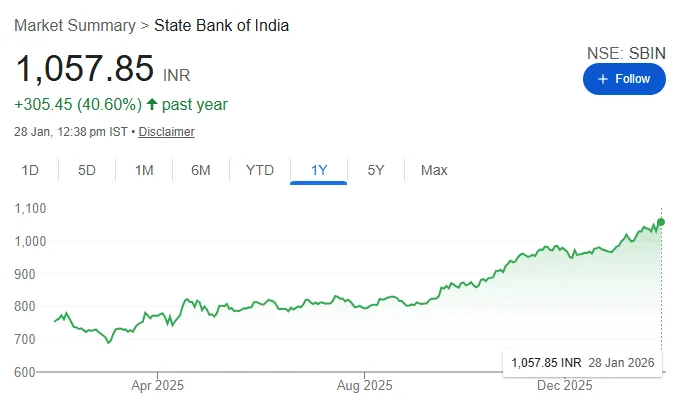
This is the most critical part for retail investors. If you hold shares of State Bank of India (SBIN), you have a distinct advantage.
The IPO will likely feature a Shareholder Reservation Category.
-
Quota Size: Up to 10% of the issue size is reserved for SBI shareholders.
-
Eligibility: You must hold SBI shares in your Demat account on the Record Date (usually the date the RHP is filed).
-
The Strategy: Smart investors often use the "Double Dip" strategy. You can bid up to ₹2 Lakhs in the Shareholder Category AND another ₹2 Lakhs in the Retail Category.
In popular IPOs, the retail category gets oversubscribed 50x or 100x, making allotment a lottery. The shareholder category usually sees much lower competition (5x-15x), significantly increasing your chances of getting an allotment.
Action Item: If you want to use this quota, ensure you buy SBI shares before the DRHP is filed in mid-February to be safe..
5. SBI Mutual Fund IPO Shareholder Quota Record Date
As of January 30, 2026, there is no official record date for the SBI Mutual Fund IPO shareholder quota because the Draft Red Herring Prospectus (DRHP) has not yet been filed. Market reports suggest the DRHP may be submitted by mid-February 2026, and typically, the record date for such quotas is the date of filing the RHP or DRHP.
6. Risks to Watch
No investment is without risk.
-
Regulatory Risk: If SEBI cuts the Total Expense Ratio (TER) further, AMC profits will take a hit.
-
Passive Investing: Index funds are growing. They generate very little fee income compared to active funds. SBIFML will need to balance this shift.
-
Market Mood: AMC stocks move with the market. If the Nifty corrects 20%, AMC revenues drop, but their costs (salaries/tech) remain the same.
Conclusion: Should You Subscribe?
As Per Analyst, The SBIFML IPO looks like a solid "Core Portfolio" candidate. It is a highly profitable, cash-generating machine with the best distribution network in India.
For existing SBI shareholders, this is a tactical arbitrage opportunity not to be missed. For everyone else, it’s a chance to own a piece of the financialization of India's savings. With the listing targeted for April 2026, keep your funds ready—this is going to be the most talked-about event on Dalal Street this summer.
Disclaimer: This article is for informational purposes only. IPO dates and valuations are based on current market reports and may change. Please consult your financial advisor before investing.