

Every time a good IPO opens, lakhs of investors rush to apply. Some apply for the maximum lots, some apply for just one — and then everyone waits anxiously for allotment day. The results? Often shocking. A person applying for ₹1.9 lakhs worth of shares gets nothing, while someone who applied for just one lot gets allotted.
Sounds random? It's actually not. There's a very specific system behind how IPO allotment is done in India — and once you understand it, you'll stop making the same mistakes most retail investors make. Let's break it down, step by step, in plain and simple language.
The Basics: What Happens After You Apply for an IPO?
When you apply for an IPO through your broker app using ASBA or UPI, your money doesn't immediately go anywhere. It just gets blocked in your bank account. You still technically own it — it just can't be spent until the allotment is done.
After the IPO closes (called T Day), the Registrar to the Issue (RTA) — a company like KFintech or Link Intime — takes all the applications and runs an algorithm. By T+3 (just 3 working days after IPO closes), shares are listed on BSE and NSE. The timeline since December 2023 looks like this:
| Day | What Happens |
|---|---|
| T Day | IPO closes. UPI mandate deadline is 5:00 PM sharp. |
| T+1 | Allotment is finalized. RTA runs the algorithm. |
| T+2 | Shares credited to Demat. Refunds unblocked. |
| T+3 | Shares list on stock exchange. Trading begins. |
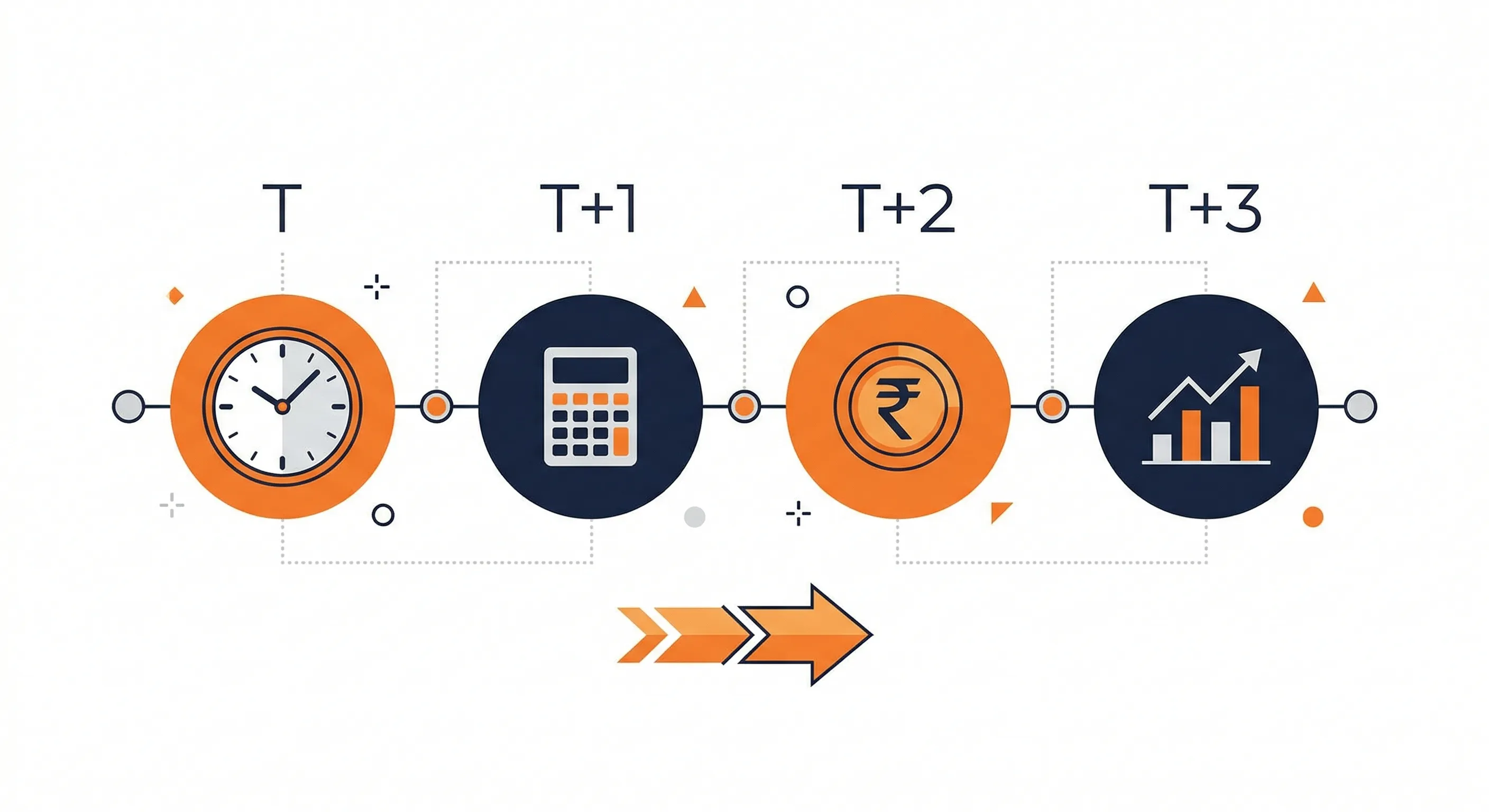
So the whole process — from closing to listing — happens in just 3 working days. Fast, right? That's because everything is digital and automated. No physical paperwork, no manual cheque clearing.
Who Can Apply? The Three Investor Categories
SEBI divides investors into different buckets, and each bucket gets a fixed share of the IPO. This is important because the allotment rules are completely different for each category.
As a regular investor, you'll almost always be in the Retail (RII) category — as long as your total application value stays below ₹2,00,000. Cross that limit even by ₹1 and you automatically move to the HNI/NII category, which has very different allotment rules.
How Is IPO Allotment Done for Retail Investors?
This is the most important section for most readers. The allotment method for retail investors depends on one thing: how many people applied vs how many lots are available.
Case 1: IPO is Undersubscribed (Less Applications Than Shares)
Lucky situation! If fewer people applied than the total shares available for retail, everyone gets full allotment. You applied for 5 lots? You get 5 lots. No lottery, no tension. This is rare for good IPOs but happens sometimes — like what happened with Hyundai Motor India's IPO where retail was subscribed only 0.5x.
Case 2: Oversubscribed But Not Too Crazy
If the number of unique applicants is less than the total number of available lots, SEBI's rule is: give everyone at least 1 lot first, then distribute remaining lots proportionally. So everyone's guaranteed a minimum of 1 lot before anyone gets a second.
Case 3: Heavily Oversubscribed (The Most Common Case)
This is where the famous IPO lottery system in India kicks in. When the number of people applying is much more than the number of available lots, it becomes physically impossible to give even 1 lot to everyone. So SEBI says: run a computerized lottery.
🎯 Key rule: In the lottery, every application — whether for 1 lot or 14 lots — gets exactly one entry. The prize is always exactly one minimum lot. Applying for more lots does NOT improve your chances of getting allotment.
Let's say an IPO has 10,000 lots available for retail and 1,00,000 people applied. The probability of allotment is simply 10,000 ÷ 1,00,000 = 10%. Whether you applied for 1 lot (blocking ~₹15,000) or 13 lots (blocking ~₹1.85 lakh) — your chance is still exactly 10%.
This is why in hot IPOs, applying for the maximum lots makes no sense. You're just locking up extra money for no benefit.
The "Cut-Off Price" Trick That Every Retail Investor Should Use
Most IPOs come with a price band — for example, ₹300 to ₹315 per share. The final price is discovered based on demand. If you manually bid ₹310 and the final price settles at ₹315, your application gets automatically rejected for being too low.
The fix? Always select "Cut-off Price" when applying. This means you're agreeing to buy at whatever the final price turns out to be. Your bid stays valid no matter what. Only retail investors get this option — HNIs and institutions must bid at a specific price.
What About HNI / NII Investors? The 2022 Rule Change
Before April 2022, rich investors (applying above ₹2 lakh) used to get allotment purely proportionally. Big money = more shares. This led to a massive problem: ultra-wealthy people would take short-term loans worth crores just to inflate their bids and crowd out genuine investors.
SEBI fixed this in 2022 by splitting the HNI/NII category into two:
| Category | Application Range | Share of IPO | Allotment Method |
|---|---|---|---|
| Small NII (sNII) | ₹2L to ₹10L | 5% of net offer | Lottery (min ~₹2L prize) |
| Big NII (bNII) | Above ₹10L | 10% of net offer | Proportional, but capped at ~₹2L minimum |
The result? Even if a bNII investor applies with ₹50 lakh, in a heavily oversubscribed IPO, they might still end up receiving just ₹2 lakh worth of shares. The leverage game effectively got killed. The Bajaj Housing Finance IPO was a perfect example of this — massive bids compressed down to just 2,996 shares, regardless of how much was applied for.
What Are Anchor Investors and Why Do They Matter?
One day before an IPO opens to the public, big institutions like mutual funds, FIIs, and insurance companies can get early allotment. These are called Anchor Investors. They must invest at least ₹10 crore to qualify.
Why should you care? Because when you see prestigious names like SBI Mutual Fund, Mirae Asset, or Goldman Sachs in the anchor investor list, it acts as a vote of confidence for the IPO. These institutions do deep research before putting in crores — their participation often drives higher retail and HNI subscriptions in the following days.
Always check the anchor investor list before applying for any IPO. Strong anchor participation from reputed domestic mutual funds is generally a positive signal. But remember — it's not a guarantee of listing gains.
Real IPO Examples: How the Numbers Played Out
Let's look at how different IPOs demonstrated these rules in action:
Tata Technologies IPO — subscribed 51.77x overall. The retail lottery was brutal. Probability of allotment for retail: extremely low, a small fraction in the single digits. Even sNII applicants had only a ~2.87% chance of getting the minimum lot. Moral: great brand, terrible odds.
Premier Energies IPO — this one had interesting probability differences across categories:
Premier Energies IPO — Allotment probability by investor category
Notice something? The retail investor had the highest chance of allotment! This is not always the case, but it shows that blindly moving to HNI category isn't always smarter.
Hyundai Motor India IPO — retail subscribed only 0.5x. Result? Every retail applicant got 100% of what they applied for. No lottery at all. But the QIB portion (subscribed 6.97x) absorbed the leftover retail shares, keeping the issue afloat.
Why Do Applications Get Rejected?
Thousands of applications get rejected every IPO cycle — not because of bad luck, but because of technical errors. Here's what to avoid: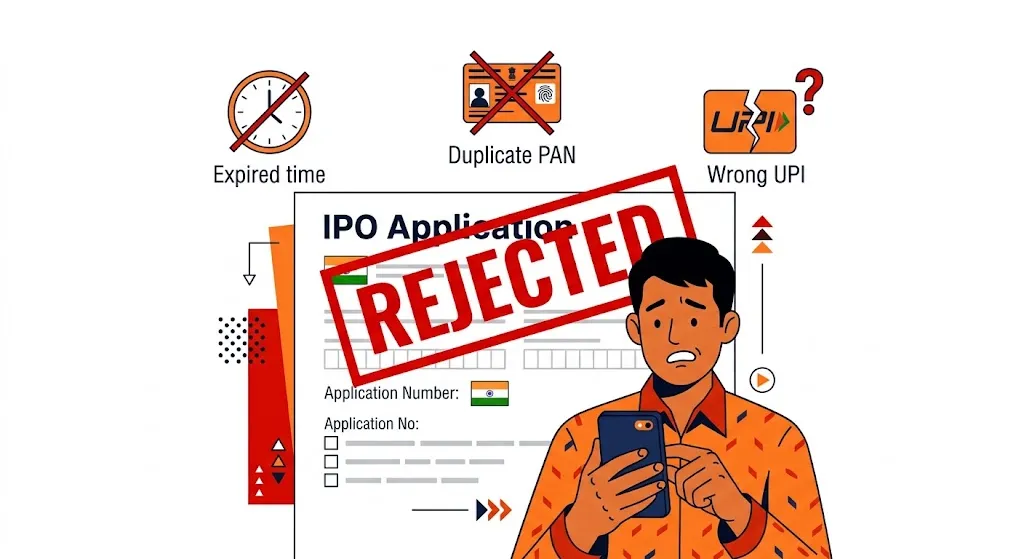
- Multiple applications with same PAN — SEBI's software catches duplicates instantly. All applications under that PAN get rejected, even if filed through different brokers or accounts.
- Not approving UPI mandate before 5 PM on T Day — this is the #1 mistake. Check your UPI app and approve the mandate as soon as you apply.
- Wrong UPI ID or mismatched name — your PAN name, Demat account name, and bank account name must all match.
- Bidding below final price (for HNIs) — if you don't select cut-off price and your bid is lower than the final discovered price, your application is rejected.
The Bottom Line
The IPO allotment process in India is not random magic — it's a well-designed algorithm built to be fair. For retail investors, it's essentially a lottery in popular IPOs, and here's the hard truth: applying for more lots does NOT improve your chances. One application per family member (each with their own PAN and Demat) is a far smarter strategy than piling maximum lots into a single account.
Always use cut-off price, always approve your UPI mandate on time, and never submit more than one application per PAN. Those three habits alone will save you from unnecessary rejections.