
For as long as most of us can remember, mornings in Indian homes have followed the same simple ritual. The newspaper lands on the doorstep with a soft thud. The kettle starts whistling on the gas stove. And somewhere on that breakfast table, between the headlines and the hot cup of chai, there is always that yellow-and-white packet of Parle-G.
We have all seen it. Dadaji dunking a biscuit in his tea. The school child grabbing a quick bite before the bus arrives. The office-goer rushing through his breakfast. Parle-G has been there during power cuts, train journeys, exam nights, and even monsoon evenings. It is the silent companion of generations of Indians.
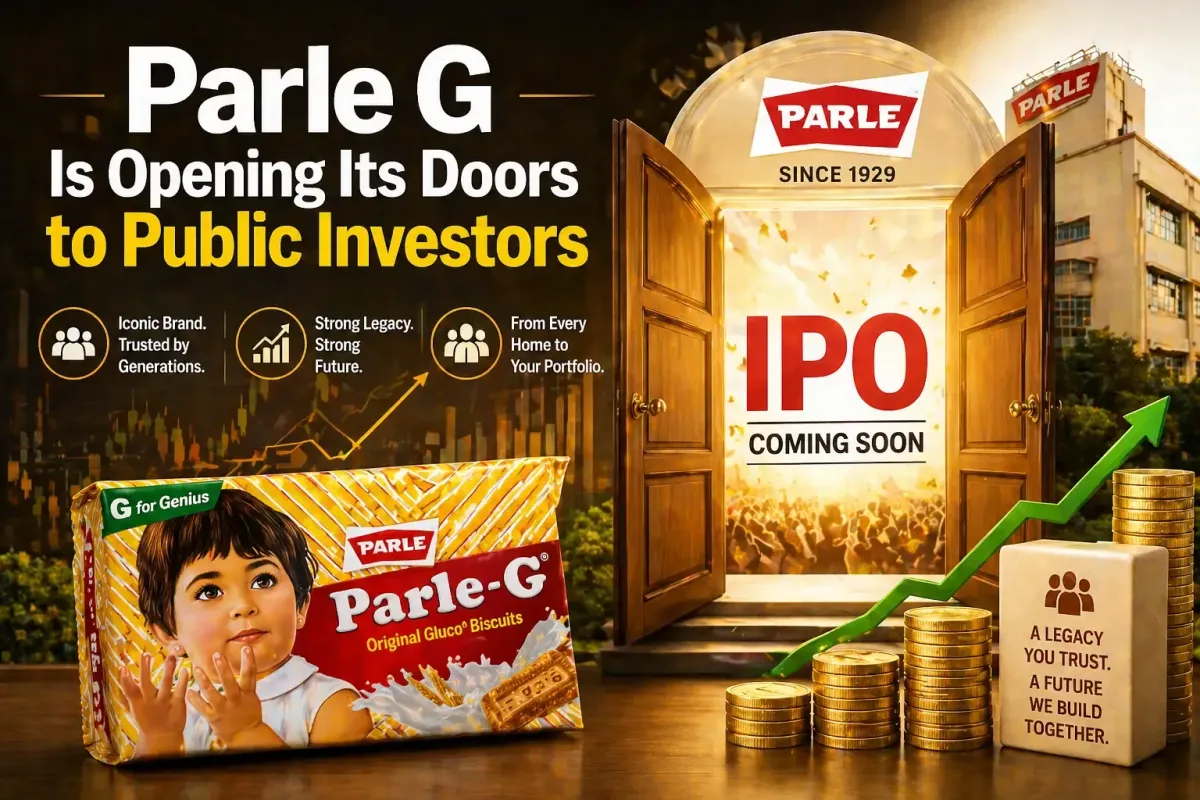
And now, in news that almost feels unreal, the very same biscuit that defined our childhood is preparing to enter the stock market.
Yes, you read that right. According to recent market reports, Parle Products, the 96-year-old company behind Parle-G, Hide & Seek, Monaco, KrackJack, Melody, Mango Bite, and Poppins, has started early discussions with leading investment banks for an Initial Public Offering.
For the first time in nearly a century, retail investors in India may finally get a chance to own a piece of one of the country's most loved consumer brands.
What We Know About the IPO So Far
Parle Products is reportedly in talks with major investment bankers including Kotak Mahindra Bank, JM Financial, and Axis Bank. Formal pitches from these bankers are expected by mid-May 2026.
But here is where the story gets interesting.
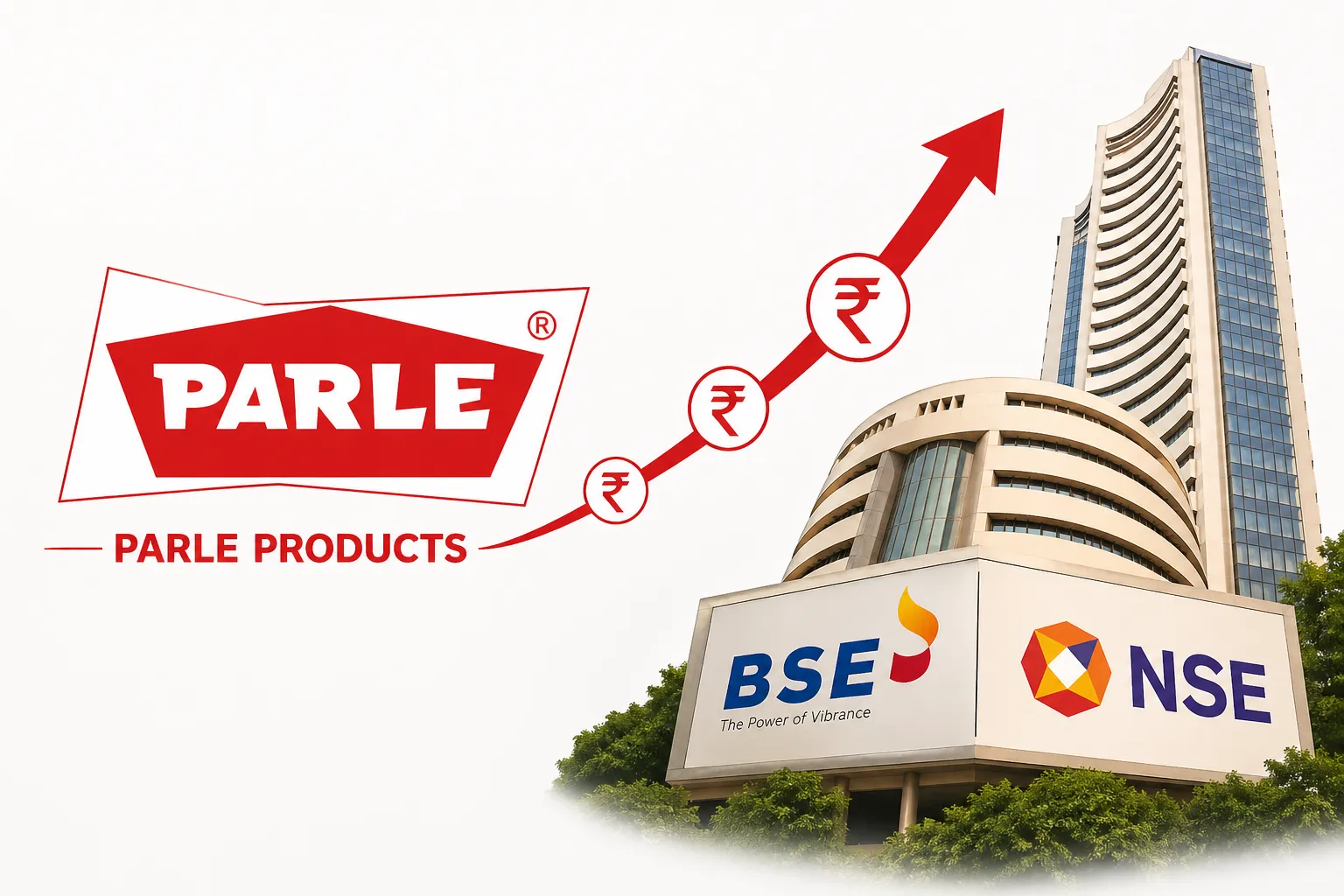
The proposed IPO is structured as a 100% Offer for Sale (OFS). This means it will be a complete secondary issuance.
In simple words, the company itself is not raising any fresh money from the public. Instead, the third-generation promoters of the Chauhan family, that is Vijay, Sharad, and Raj Chauhan, will sell a portion of their existing shareholding to investors.
Why is this important? Because it tells us something powerful about Parle's financial health.
The company simply does not need money.
As of FY25, Parle Products is operating with practically zero debt. It has a net worth of ₹9,642 crore, holds cash reserves of around ₹1,002 crore, and generates strong operating cash flows of ₹917 crore.
So instead of diluting equity for capital it doesn't actually require, the promoters are using the IPO route to monetise a small part of their family wealth.
A Quick Walk Down Memory Lane
The Parle journey started way back in 1929, in a small factory in Vile Parle, Mumbai. That is where the brand actually gets its name from.
The Chauhan family began with confectionery items. The real turning point came in 1939, when they baked their first biscuit and called it Parle Gluco.
After Independence in 1947, Parle Gluco was marketed as the patriotic, swadeshi answer to imported British biscuits. That deshi feeling stayed with the brand for decades.
In the 1980s, due to rising competition and copycat brands flooding the market, Parle Gluco was rebranded as Parle-G. And the rest, as they say, is history.
From the 1940s till the late 1970s, a single Parle-G biscuit was sold for just 5 paise. The standard pack was kept fixed at ₹5 for more than two decades. Recently it has been adjusted to ₹4.45 due to supply chain pressures.
Nielsen had famously declared Parle-G as the world's largest selling biscuit by volume in 2003 and again in 2020. That is a remarkable achievement for an Indian brand competing against global names.
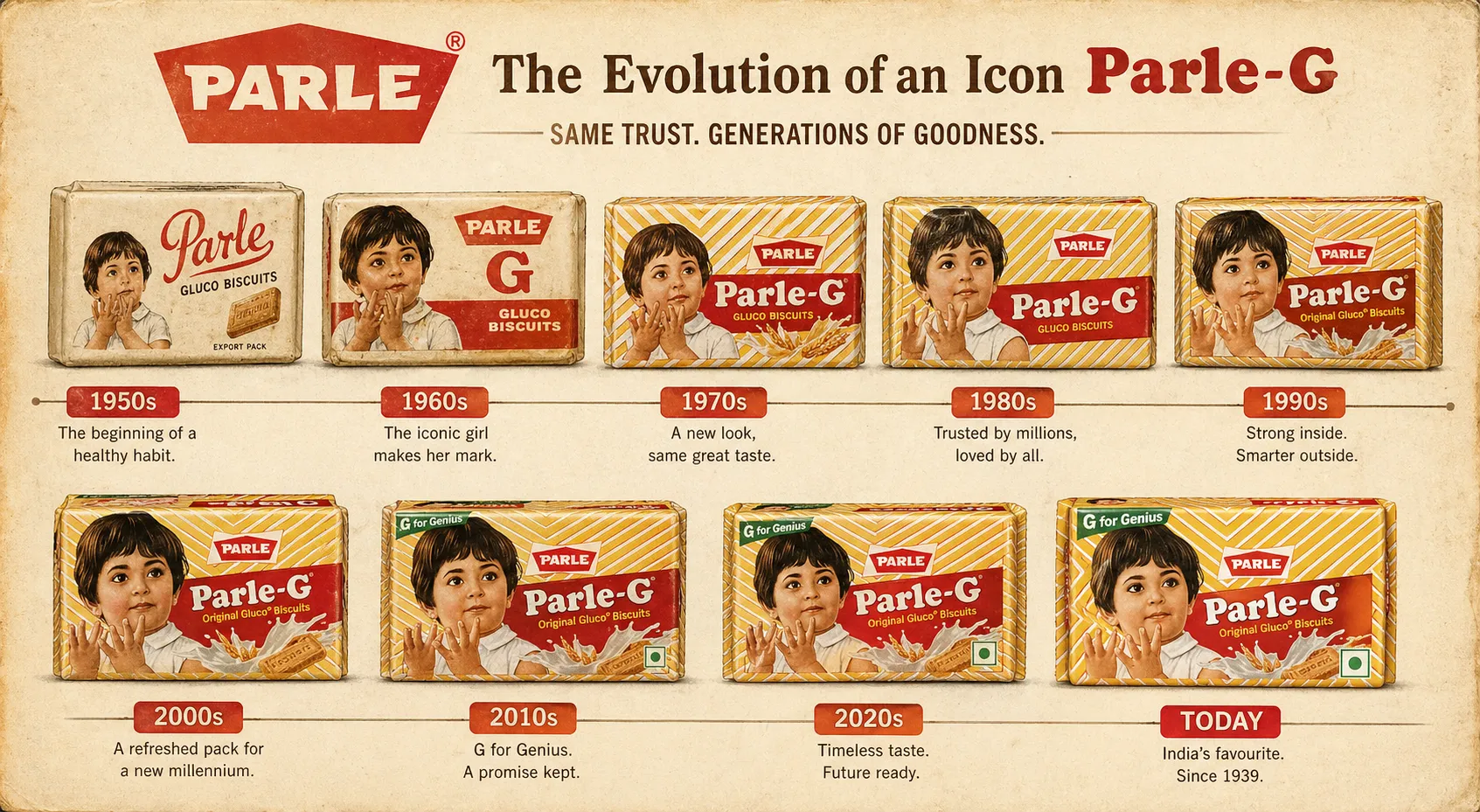
One important clarification for investors. The original Parle empire has been split into three completely separate companies over the years.
Parle Products, the one going for IPO, handles biscuits and confectionery. Parle Agro runs beverages like Frooti and Appy Fizz. Parle Bisleri manages the packaged drinking water business.
All three companies operate independently. So when you invest in this IPO, you are investing only in the biscuit and confectionery business. It is a clean, pure-play opportunity.
The Financial Picture: Strong Top Line, Weak Bottom Line
Now let us come to the part every IPO Guru reader is waiting for. The numbers.
For the financial year ended March 2025, Parle Products reported an operational revenue of ₹15,568.49 crore. This was up 8.5% year-on-year. Total income stood at ₹16,190.98 crore.
So clearly, the top line is healthy and growing. But here comes the worrying part. Net profit fell sharply by 39% to ₹979.53 crore.
The reason behind this drop is quite simple. Input costs went through the roof.
Wheat, maida, edible oils, and sugar all became significantly more expensive. This was because of global supply disruptions and climate-related issues affecting Indian agriculture. Total expenses shot up by 14.65% to ₹14,881.3 crore.
Since Parle's portfolio is heavily dependent on mass-market, low-priced biscuits like Parle-G, the company simply could not pass on these higher costs to consumers without hurting volumes.
Here is how Parle stands against its main competitors:
| Company | FY25 Revenue (₹ Crore) | Market Focus |
|---|---|---|
| Britannia Industries | 17,942.67 | Market Leader, urban and premium |
| Parle Products | 15,568.49 | Mass market, deep rural reach |
| Mondelez India | 12,502.95 | Premium indulgence, chocolates |
Britannia continues to be the market leader. The main reason is its strong urban and premium portfolio, which gives it better pricing power.
ITC has also been emerging as a serious competitor under its Sunfeast brand. Its overall FMCG revenue has touched around ₹34,000 crore.
The Premiumisation Push: Enter Parle Platina
Parle clearly understands that the future is not only about glucose biscuits.
To compete with Britannia in the higher-margin premium segment, Parle has set up a dedicated division called Parle Platina back in 2017.
This division houses premium brands like Hide & Seek (chocolate chip cookies), Milano (premium cookies with exotic ingredients), and Nutricrunch (health-focused biscuits).
Currently, premium biscuits, defined as products priced above ₹250 per kg, contribute around 14 to 15% of Parle's total revenue.
Company management wants to take this share up to 20 to 25% in the coming years.
Around 50% of Parle's marketing budget is now being spent on Platina brands. Celebrities like Twinkle Khanna are fronting these campaigns, aimed at urban and upper-middle-class consumers.
Quick Commerce: The New Battleground
If Parle wants to win the next decade, it will have to master quick commerce.
Apps like Zepto, Blinkit, and Swiggy Instamart now account for 70 to 75% of all e-grocery orders in India. This segment is growing at an explosive 70 to 80% CAGR.
The old model of getting visibility on the kirana shop shelf is changing very fast. Parle has responded by increasing its digital marketing spend to over 20% of its overall budget. The company is also using AI-driven tools for targeted consumer communication.
Beyond biscuits, the company is diversifying into pulses like arhar, chana, moong, urad, and masoor dal. It is also expanding into salty snacks under brands like Monaco Smart Chips and Mexitos.
The internal target is ambitious. The company wants to double its turnover to ₹20,000 crore.
Should You Invest in the Parle IPO?
This is the question every IPO Guru reader is going to ask. And honestly, it is too early to give a final answer.
The Draft Red Herring Prospectus (DRHP) has not yet been filed. The price band is still unknown. The final IPO size is also being worked out.
What we do know is this. Parle is one of the strongest consumer brands in India. Its rural distribution network has taken decades to build. The company is debt-free, cash-rich, and culturally embedded in Indian households.
But the margin pressure is real. The success of the IPO will largely depend on the valuation premium the company asks for, compared to Britannia.
If priced reasonably, Parle could become a long-term wealth creator. If priced aggressively, it may disappoint in the short term. We have already seen this happen with several FMCG listings in recent times.
Final Thoughts
There is something deeply emotional about Parle going public.
The biscuit that has fed Indian children, comforted countless railway passengers, and accompanied millions of chai sessions for nearly a century, is now stepping into the world of stock tickers and quarterly earnings calls.
For investors, this is a chance to own a small slice of Indian history. For the markets, it is a milestone moment. We at IPO Guru will keep updating this story as more details come out.
Till then, maybe make yourself a cup of hot chai, open a packet of Parle-G, and just sit with that thought for a moment. Because the next time you dip that biscuit into your tea, it might just be a stock that you own.